About Conservation indica

Our Story
What is conservation research for us?
What is conservation research for us?
We are research nerds. We want to make research work for everyone but especially for the most marginalised - humans and non-humans. Conservation indica was born from some of the nagging questions that kept us awake at nights. What can make fast driving vehicles slow down on wildlife corridors? What is at stake when dams are built in eco-s
We are research nerds. We want to make research work for everyone but especially for the most marginalised - humans and non-humans. Conservation indica was born from some of the nagging questions that kept us awake at nights. What can make fast driving vehicles slow down on wildlife corridors? What is at stake when dams are built in eco-sensitive zones? How high will rhododendron trees travel to escape warming of their altitudes? Learn more about what makes us tick.

What is conservation research for us?
What is conservation research for us?
What is conservation research for us?
We have learnt with experience that policies regrading nature and all the life in nature are not always based on academic research papers. Policy decisions are majorly based on current political will and public interest. We aim to place conservation research in the domain of public interest and public will. We look at data and data holder
We have learnt with experience that policies regrading nature and all the life in nature are not always based on academic research papers. Policy decisions are majorly based on current political will and public interest. We aim to place conservation research in the domain of public interest and public will. We look at data and data holders as assets for policy change. We acknowledge our privilege of university education and wish to share that into research that gives back to the commuinity.

Donate
What is conservation research for us?
Donate
If our ideology resonates with you, please consider donating to Conservation indica for ethical, transparent, inclusive and responsible nature conservation. No amount is too small for supporting our work. Currently, we are operating in the States of Gujarat and Himachal Pradesh. Your support will directly impact 423 pastoral community hou
If our ideology resonates with you, please consider donating to Conservation indica for ethical, transparent, inclusive and responsible nature conservation. No amount is too small for supporting our work. Currently, we are operating in the States of Gujarat and Himachal Pradesh. Your support will directly impact 423 pastoral community households in our Gujarat project sites and help us implement solutions for forest fire mitigation in Himachal pradesh. We keep updating this section with most recent projects to show where your contributions go.
Chotila Grasslands, Gujarat
Human–Wildlife Interactions
Human–Wildlife Interactions
Human–Wildlife Interactions

India’s grasslands are home to wildlife such as wolves, striped hyenas, jackals, chinkaras, hares, porcupines, Indian foxes, and leopards. But as habitats shrink and are reshaped by infrastructure and land-use change, wildlife movement and interactions are also changing.
People are often quick to assume that leopard numbers are increasing. But are leopards becoming more abundant, or are they being pushed out of former habitats now replaced by airports, highways, and green energy sites? We do not yet know.
Through our camera traps, we recorded a mother leopard and her two cubs using a path shared by wildlife, livestock, and people, just 70 metres from human habitation. At the same time, local communities report hearing less and less of wolves. Our work aims to understand these changing interactions and what they mean for people, livestock, and grassland predators.
Ecosystem Stewardship
Human–Wildlife Interactions
Human–Wildlife Interactions
Our work begins with a simple belief: people living closest to nature are often its deepest knowledge holders. Their everyday lives are shaped by close observation of seasons, wildlife, grazing patterns, water, and vegetation, making traditional ecological knowledge essential to understanding and caring for these landscapes. We work with this belief to strengthen and elevate regional stewardship.
In Surendranagar’s commons, we have worked to establish a biodiversity baseline while deepening community participation in conservation. In this landscape, Maldhari pastoralists have long lived alongside grasslands, herding indigenous livestock breeds and sustaining a way of life closely tied to the health of the commons. By recognising their stewardship role, we aim to build local leadership in grassland conservation and ensure their knowledge and voices help shape land-use decisions.
Restoration and Rewilding
Restoration and Rewilding
Restoration and Rewilding
Grasslands remain among the least understood and most overlooked ecosystems in conservation science, often undervalued despite the many services they provide. In our landscape, we employ a pastoralist lens to understand grassland health more fully, as both a wildlife habitat and a source of grazing, livelihood support, ecological resilience, and long-term coexistence between people and nature.
Our restoration work in Chotila’s grasslands focuses on removing the invasive alien plant Senna uniflora (locally known as kuvad), which is degrading grazing lands and altering habitat for native grassland wildlife. Its spread threatens both pastoral livelihoods and species such as the Indian gazelle, which depend on open grasslands. Click on the button below to read women's role in the work.
Pastoral Legacies
Restoration and Rewilding
Restoration and Rewilding
Understanding grasslands requires looking beyond what is visible today and asking what has shaped these landscapes over time: land lineage, grazing practices, seasonal movement, customary management, and the relationships between people, livestock, and wildlife.
Supported by Archives at NCBS, our work documents decades-old knowledge systems that have long supported grassland ecosystems, yet have remained largely neglected within conservation science. In Chotila’s commons, Maldhari pastoralists carry detailed knowledge of land, forage, livestock, water, and wildlife that offers valuable insight into how these open landscapes function.
Lahaul, Himachal Pradesh
Human–Wildlife Interactions
Human–Wildlife Interactions
Human–Wildlife Interactions
In Lahaul’s high-altitude landscapes, agrarian and pastoral communities share space with species such as the Himalayan brown bear, snow leopard, Himalayan wolf, red fox, Himalayan ibex, and blue sheep. Building on previous research, we are working with farmers, orchard owners and governmen agencies to better understand these interactions and develop mitigation strategies that support both biodiversity and livelihoods. At present, we are focusing on understanding the patterns of crop depredation by Himalayan brown bears in the left bank villages of the Chenab in Lahaul, while also exploring ways to mitigate these losses through technical interventions as well as policy-level solutions.
Ecosystem Stewardship
Human–Wildlife Interactions
Human–Wildlife Interactions
Lahaul is shaped by harsh winters, rugged terrain, and long periods of isolation. For much of the year, snow, freezing temperatures, and difficult access define everyday life. Residents here have adapted to these conditions over generations, building livelihoods and knowledge systems closely attuned to seasonality, terrain, crops, livestock, and wildlife movement. This deep familiarity with the landscape is a form of stewardship in itself.
Our work recognises that people living closest to this environment hold important knowledge about how the ecosystem changes through the year. The seasonal calendar shown here, developed with the women of Jasrath, reflects this lived understanding. It maps the cycles of weather, agriculture, livestock, wildlife presence, and daily labour across the seasons, offering a picture of how life and ecology are deeply interconnected in this high-altitude landscape.
Species Recovery
Restoration and Rewilding
Restoration and Rewilding
Lahaul’s trans-Himalayan ecosystems provide critical habitats for wide-ranging carnivores and alpine fauna, as well as threatened medicinal plants such as Aconitum heterophyllum (Atis), Picrorhiza kurroa (Kutki), and Dactylorhiza hatagirea (Salampanja). By integrating ecological data with local observations, our goal is to contribute to recovery strategies for species threatened by climate change, habitat fragmentation, and negative interactions with human activity.
Restoration and Rewilding
Restoration and Rewilding
Restoration and Rewilding
In collaboration with the Lahaul Forest Division, we are contributing to an eco-tourism development plan that integrates restoration of fragile ecosystems with sustainable livelihoods. Our long-term vision is to rewild degraded areas while supporting ecologically sensitive tourism models.
Bridging Policy and Practice

EDUCATION AND OUTREACH

In the winter of 2025, children of Reshamiya village joined us one sunny day to learn mixing water colors and painting their favourite plants. A wonderful booklet called "In Bloom" was co-created as a result of this and other exercises over the seasons. A digital copy of In Bloom can be seen in our Publications tab.

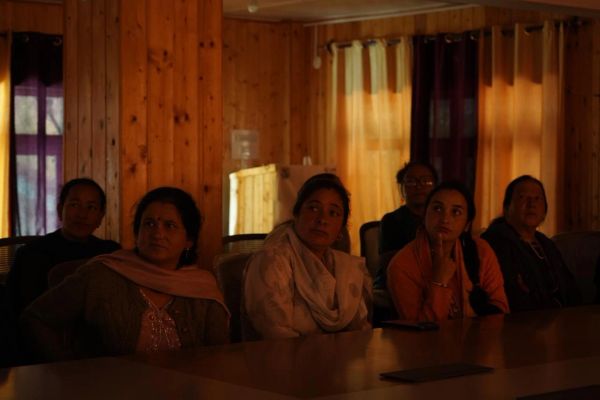
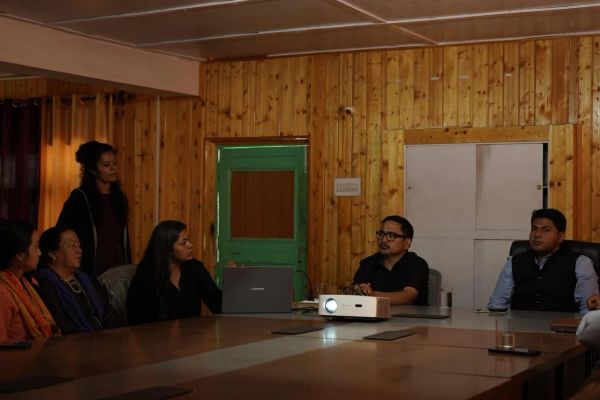
In December 2024, Conservation indica in collaboration with Sahjeevan, hosted an open-air community movie night under the winter sky. We screened four short films developed by the Grasslands Trust, each exploring themes of wildlife, grasslands, and coexistence. The screenings drew a large audience, and the evening ended with an engaging discussion, where residents shared their own experiences of living alongside wildlife.

In August 2025, we invited the residents of Reshamiya to explore their surroundings through the lens of their mobile phones. Participants captured the diversity of plants, animals, and landscapes around their village. The photographs were displayed in a community exhibition, sparking lively discussions on local biodiversity and conservation. This contest not only encouraged observation and appreci
projects IN IDEATION - seeking collaborations
Biodiversity in Archaeological Sites
Biodiversity in Archaeological Sites
Biodiversity in Archaeological Sites
India is home to ancient archaeological sites - some protected by the Archaeological Survey of India and others unprotected. Both types of sites host diverse biodiversity. Our team is interested in documenting this biodiversity with the objective to enhance education at protected archaeological sites and seek legal protection for non-protected sites. Currently, we are doing this with our limited funds and small team. We are seeking collaborations in the form of funding, equipment and human resources. If this is something that interests you, please reach out to us.
Roots & Routes
Biodiversity in Archaeological Sites
Biodiversity in Archaeological Sites
Conservation indica was established to elevate traditional ecological knowledge and democratize conservation research. To bridge the esearcher-subject divide and to eliminate the epistemic hegemony, the young pastoralists have embarked on a journey of documenting their nature and culture. Please reach out to us to know more if interested. We are seeking funds and tech support for this idea.
CREATIVES


Lober Bridge, Udaipur, Lahaul
Bhaga river, Keylong
Stupas at Shashur Monastery, Keylong

StoryMap developed by Aaromal